
Recent comments from Donald Trump sparked widespread speculation about a potential softening of his stance on H-1B visas, especially after he remarked that America needs to attract more skilled talent from around the world. This was interpreted by many as a significant shift from his administration’s traditionally hardline approach to immigration. During an interview, Trump explicitly stated that the US doesn’t possess certain specialized talents and that “people have to learn,” suggesting an openness to foreign experts that seemed new.
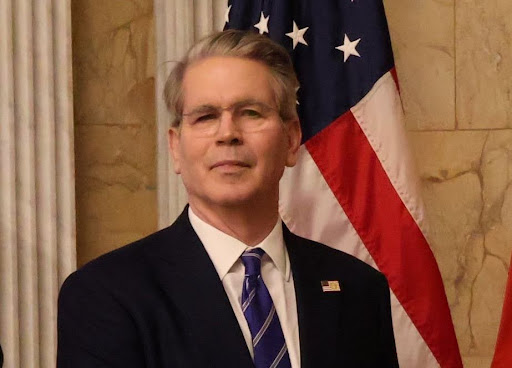
However, Treasury Secretary Scott Bessent has now moved to clarify these remarks, placing them in a much different context. According to Bessent, the president’s comments were not about a general influx of skilled workers for permanent roles, but about a highly specific, temporary program. The new vision, he explained, is centered on “knowledge transfer” rather than simple workforce augmentation, fundamentally reframing the purpose of bringing in foreign experts.
Bessent detailed a new policy framework described as “Come to US, train American workers, go home.” He articulated that this policy is designed to allow skilled foreign specialists to enter the US for a limited duration, specifically to train the domestic workforce, not to replace them. “I think the president’s vision here is to bring in overseas workers who have the skills for three, five, seven years to train the US workers,” Bessent stated, adding, “Then they can go home, and the US workers will fully take over.”
The rationale for this approach, Bessent argued, is a pressing skills gap in critical industries. He bluntly stated that Americans are not yet equipped for certain technical jobs, citing areas like shipbuilding and semiconductor manufacturing as sectors where the US has fallen behind. “An American can’t have that job, not yet. Because we haven’t built ships in the US for years, we haven’t built semiconductors,” he explained, justifying the temporary need for foreign expertise.
This “train and return” model is being touted as the ideal solution, a “home run” for the American economy. The strategy, as outlined by Bessent, involves using overseas partners as temporary instructors. These experts come in, teach American workers the necessary advanced skills, and then depart, leaving behind a fully capable domestic workforce ready to take over these high-tech manufacturing and defense jobs.
The “Train and Return” Mandate: Bessent Details New H-1B Vision
Picture Credit: commons.wikimedia.org
37