
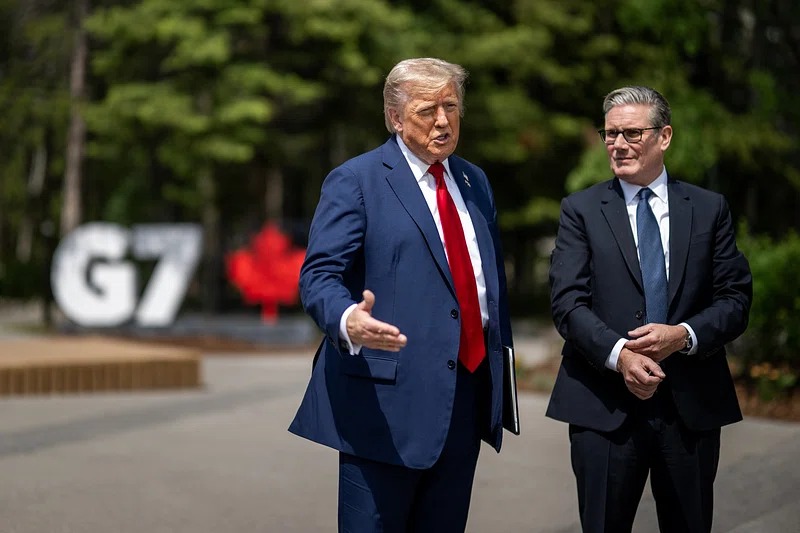
The tension between Washington and London reached a boiling point after the United States president publicly dismissed the United Kingdom’s belated offer of military cooperation over the ongoing conflict involving Iran. In a sharp message posted on his social media platform, the president made clear that Britain’s delayed response had not gone unnoticed — and would not be forgotten.
The American leader specifically targeted the British prime minister, sarcastically noting that the UK was “finally” considering sending aircraft carriers to the Middle East. He pointedly declared that such assistance was no longer necessary, implying that the window for meaningful contribution had already closed. The tone of the message was unmistakably one of disappointment and frustration.
The backdrop to this diplomatic friction is significant. Britain had initially refused to allow American forces to use its military installations for offensive operations against Iran. That position eventually shifted, with the UK granting permission for US bombers to land at a Royal Air Force base and conduct what officials described as operations with a “specific and limited defensive purpose.”
Four US bombers arrived at a British base over the course of a Friday and Saturday, and operations began almost immediately. British defence officials framed the decision as one aimed at preventing Iran from firing missiles into the region — a threat they said posed a direct risk to British lives. Despite this, the relationship between the two governments appeared strained by the episode.
The situation was further complicated by senior American officials weighing in. The US secretary of state, speaking at a regional security conference, suggested that allies who fail to show up in moments of need cannot expect the same loyalty in return. The remarks were widely interpreted as directed at Britain and other nations that had initially declined to participate.