
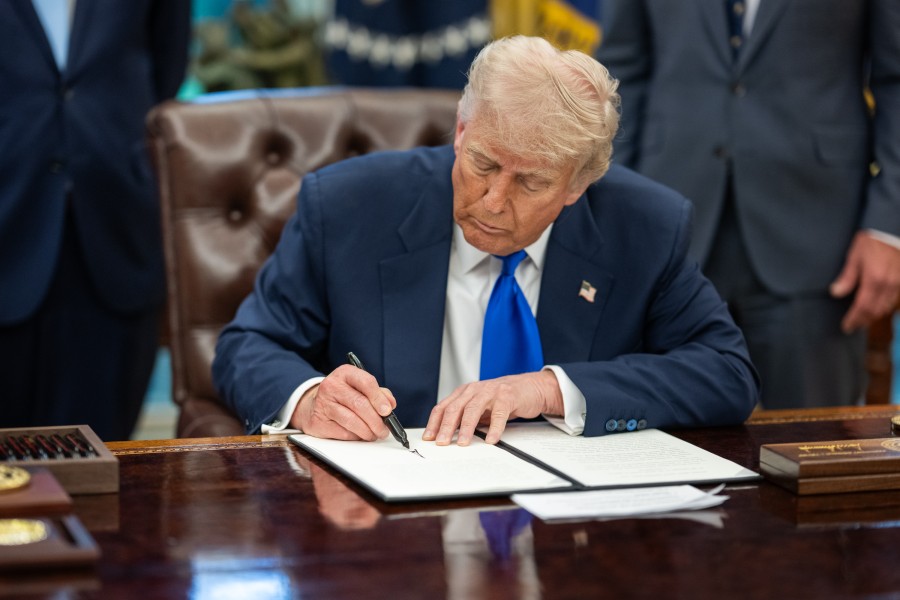
President Donald Trump has issued a stern warning that the United States is ready to take further measures against Iran should it fail to adhere to current agreements designed to prevent the development of nuclear weapons. At the White House, Trump emphasized that stopping Iran from acquiring nuclear capabilities is a top priority for his administration, asserting that the dangers posed by nuclear proliferation far outweigh any economic repercussions. He indicated that the U.S. would respond decisively if Iran violated its commitments or engaged in activities threatening regional stability.
A significant development highlighted by Trump was the reopening of the Strait of Hormuz, a vital passageway for oil and natural gas shipments. He described this as a critical success for global energy markets and international trade. These remarks come during delicate diplomatic negotiations between Washington and Tehran following a memorandum of understanding agreed upon last week. The memorandum included terms related to maritime security and sanctions relief, with further discussions on Iran’s nuclear program anticipated over a 60-day negotiation period.
U.S. Vice President JD Vance stated that Iran had consented to allow inspectors from the International Atomic Energy Agency back into the country, calling it a crucial move towards ensuring that Iran does not develop nuclear weapons. However, Iranian officials have refuted this claim, insisting that no new commitments regarding their nuclear program have been made. Iranian negotiators have maintained that talks are ongoing and have tied broader regional issues, such as maritime security and sanctions relief, to future negotiations.
Amid these developments, there are still uncertainties regarding shipping activities through the Strait of Hormuz. While U.S. officials claim that energy flows have returned to normal, independent shipping data indicates that vessel traffic remains below pre-conflict levels. These issues unfold amid persistent regional tensions involving Iran, Israel, and Lebanon. Israeli authorities have voiced concerns about the current diplomatic framework, arguing that it inadequately addresses Iran’s nuclear and missile capabilities.
The United States has reiterated its commitment to preventing Iran from obtaining nuclear weapons while ensuring regional stability through diplomacy supported by deterrence. As talks continue, the international community watches closely, aware that the outcome of these negotiations carries significant implications for regional and global security.