
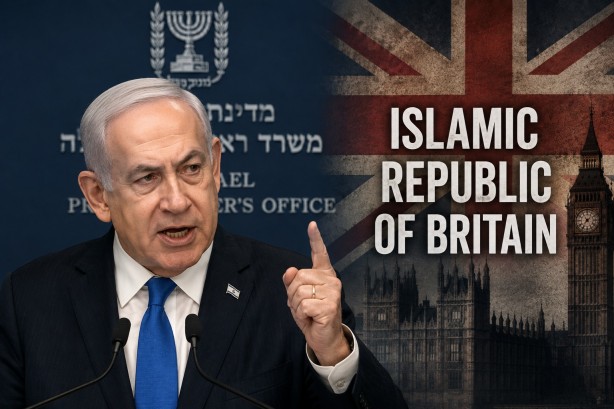
In a recent podcast interview with Israel’s army radio, Israeli Prime Minister Benjamin Netanyahu sparked controversy by labeling the United Kingdom as the “Islamic republic of Britain” and suggesting it could become the “first Islamic republic to get a nuclear weapon.” These comments have drawn sharp criticism both from British officials and political figures within Israel, who view them as contributing to Islamophobic stereotypes concerning Britain’s Muslim population.
Relations between the UK and Israel have already been under strain due to the ongoing conflict in Gaza and Britain’s increasing criticism of Israeli policies. British Prime Minister Andy Burnham has previously stated that the UK may intensify its pressure on Israel, potentially through sanctions and trade restrictions related to illegal settlements. Netanyahu’s remarks have been condemned by the British Foreign, Commonwealth and Development Office as “completely unacceptable,” and they have formally raised the issue with the Israeli government.
The tension comes at a time when Israel is facing growing diplomatic isolation, with Netanyahu’s comments potentially further damaging relations with key international allies. Israeli opposition politician Avi Dabush criticized Netanyahu, accusing him of harming Israel’s diplomatic ties at a critical moment.
Netanyahu’s remarks also come in the context of heightened debates over Islamophobia and anti-Muslim rhetoric within Britain. His comments compared the UK to Pakistan, which has been officially recognized as the Islamic Republic of Pakistan and has had nuclear capabilities since the 1990s. The comparison has been seen as particularly inflammatory, stirring tensions amid already complex international relationships.
The situation underscores the broader strains in Israel’s relationships with several Western nations, exacerbated by the ongoing conflict in Gaza. As these dynamics evolve, Netanyahu’s controversial statements may further challenge diplomatic ties between Israel and its traditional allies.