
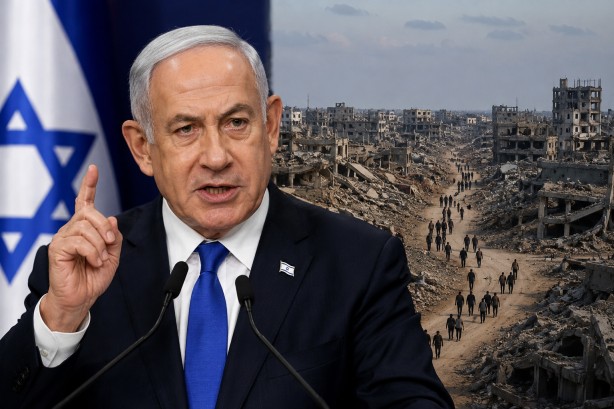
Prime Minister Benjamin Netanyahu has firmly stated that Israeli military forces will not be withdrawn from Gaza until Hamas is fully disarmed, dismissing a US-backed proposal that ties the withdrawal to a broader peace plan. Israeli authorities argue that pulling out troops prematurely would enable Hamas to reestablish its control over Gaza, potentially heightening security risks. This stance comes amid reports that Hamas is actively recruiting fighters, rebuilding its military capabilities, and accumulating more arms.
The US-brokered proposal for a ceasefire outlines a multi-faceted approach. It calls for Hamas to relinquish its weapons and dismantle its network of tunnels. It also involves a gradual withdrawal of Israeli forces, the formation of a Palestinian technocratic administration, the deployment of an international security force, and efforts toward the reconstruction of Gaza. However, Israel’s insistence on Hamas’ complete disarmament before any military withdrawal remains a significant hurdle in the peace process.
As tensions persist, the region has witnessed a surge in violence. Recent Israeli airstrikes have reportedly resulted in the deaths of at least 17 people, including children. In a separate incident, Palestinians organized a mass funeral following the recovery of over 100 bodies from the rubble of a significant Israeli airstrike in Gaza City’s Sabra neighborhood. This airstrike occurred in November 2023, and rescue operations are ongoing as many victims are feared to still be trapped beneath the debris.
The ongoing conflict traces back to an October 7, 2023, attack by Hamas on southern Israel. This assault resulted in approximately 1,200 Israeli fatalities and the abduction of 251 hostages, serving as the catalyst for the current war in Gaza. The situation remains dire as both sides grapple with the complexities of the conflict and the heavy toll it has taken on civilians.