
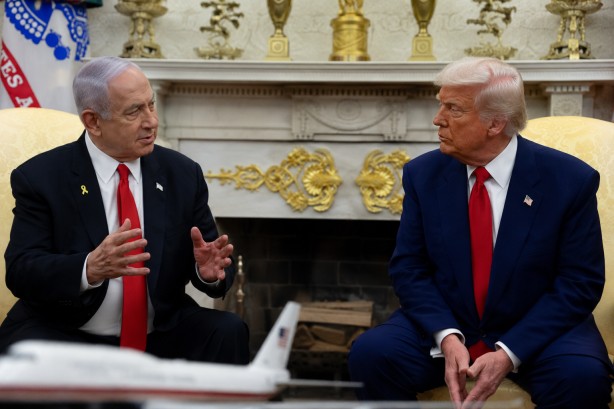
At the White House, Israeli Prime Minister Benjamin Netanyahu and U.S. President Donald Trump engaged in a comprehensive dialogue centering on Iran, regional security, and the future of U.S.-Israel relations. A senior Israeli official disclosed that the discussions revolved around three potential strategies concerning Iran: negotiating a diplomatic agreement, intensifying economic sanctions, or contemplating further military measures. The meeting was portrayed as an exchange of perspectives rather than an endorsement of any single course of action.
Netanyahu expressed skepticism regarding Iran’s commitment to any prospective agreement, yet he did not advocate for the U.S. to initiate new military strikes. Both leaders concurred that stopping Iran from acquiring nuclear weapons remains a shared aim. The talks also explored methods to escalate economic pressure on Tehran while minimizing repercussions on global energy markets. Netanyahu stressed that Iran should not be allowed to use the Strait of Hormuz as leverage in negotiations.
In addition to Iran, the meeting addressed regional security matters, including Israel’s military presence in Syria and southern Lebanon. Netanyahu reportedly used maps to illustrate Israel’s security concerns, emphasizing the necessity of maintaining defensive positions against potential threats. These discussions highlight the ongoing complexities in ensuring stability in the region.
The leaders also examined long-term U.S.-Israel defense collaboration. Netanyahu proposed a gradual reduction in Israel’s reliance on American military aid over the next decade, coupled with an expansion of joint defense research and development initiatives. This approach aims to bolster the strategic partnership while enhancing Israel’s self-reliance.
Despite reports suggesting possible tensions, the Israeli official described the relationship between Netanyahu and Trump as close and cooperative. This characterization underscores the continued dialogue and alignment between the two nations on critical regional policies and security concerns.