
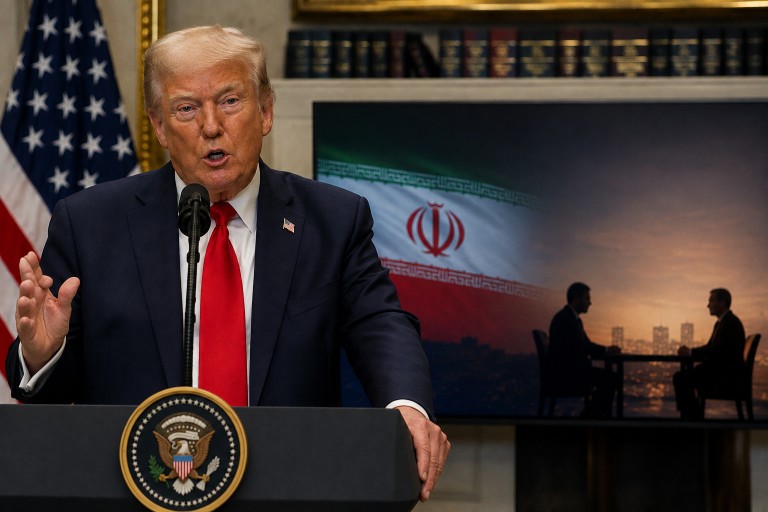
President Donald Trump announced that a military strike on Iran was called off after he received indications that negotiations were edging towards a framework agreement. This potential deal aims to reopen the Strait of Hormuz and address lingering issues concerning Iran’s nuclear activities. Trump noted that the decision to halt the planned attack followed appeals from Iran and several other Middle Eastern nations, with Israel backing the move.
Contradicting Trump’s assertions, Iranian officials denied requesting a halt to military actions, labeling his statements as false. They emphasized that their armed forces remain on high alert and warned that any military aggression from the United States or Israel would be met with a robust response. Such retaliation could include targeting regional energy infrastructure, Iranian authorities cautioned.
These developments come amid heightened tensions that have left global energy markets jittery. The ongoing friction has led to disruptions in shipping routes through the critical Strait of Hormuz, a vital artery for global oil supply, contributing to persistent worries about energy security and availability.
As the situation unfolds, the international community watches closely, mindful of the potential for further escalation and its ramifications on both regional and global stability. The uncertainty surrounding these negotiations and the strategic choke point of the Strait have underscored the fragile nature of current geopolitical dynamics.